
















Written by Bel Hernandez Castillo

Thirty years ago, Latino representation at the Academy Awards was almost invisible. In the mid-1990s, nominations for Latino artists were almost non existent and often limited to a single acting nod or a film from Latin America competing in the international category. Hollywood’s biggest night rarely reflected the depth of talent emerging from Latino communities in the United States and across Latin America.

The 98th Academy Awards, set for March 15, 2026 at the Dolby Theatre in Hollywood, feature 13 Latino creatives recognized across acting, producing, writing, and animation categories. The nominations highlight the continued global influence of Latinos talent in both studio and independent filmmaking.

Fast-forward to the 98th Academy Awards, and the picture—while still imperfect—shows meaningful progress. This year’s nominees include 12 creatives, from actors to casting Directors

What we can say is that there has been some progress.

Throughout the 1990s there were only three Latinos who garnered an Academy Award nomination in the actor category. That is three actors in ten years: Andy Garcia (Best Supporting Actor, The Godfather Part III, 1990), Rosie Perez (Best Supporting Actress, Fearless, 1994), and Brazilian actress Fernanda Montenegro (Best Actress, Central Station, 1998), who was the first Latina nominated in that category.

Fast-forward to the 98th Academy Awards, and the picture—while still imperfect—shows meaningful progress. This year’s nominees include a historic Best Actor nomination for Wagner Moura, and a secont Oscar nomination for Oscar winner Benicio del Toro (for Traffic). However this year there is a strong showing behind the lens beginning with multiple nominations for visionary Mexican filmmaker Guillermo del Toro. It is behind the scenes that Latino creatives are ceating and shaping major studio projects and independent film, including producer Yvett Merino and filmmaker Adrian Molina in the animated feature category — and more.

Compared with three decades ago—when Latino nominees could often be counted on one hand—the 2026 slate reflects a broader presence across acting, producing, writing, and directing. It’s a that there is more projects employing Latinos, or they themselves are creating the projects. There is definitely a stronger presence of Latino actors and behind the scenes creative, with an increasing move from the margins into the creative center of global filmmaking.

Yet the progress tells only part of the story. One glaring absence remains: Latinas. Despite a year rich with powerful performances and acclaimed films by Latina creatives, women of Latin American descent are largely missing from the nomination roster.

As Hollywood celebrates this year’s nominees, the conversation inevitably turns to the question that continues to echo through awards season: whose work is still being overlooked? But that is for another article.

For now we celebrate all the the Oscar nominees and draw your attention to the 2026 Latino Oscar nominees, from on-screen talent, to behind the camera. And the nominees are…


2026 Actor Oscar Nominees

ACTORS

Benicio del Toro

Nomination: Best Supporting Actor — One Battle After Another

Academy Award winner Benicio del Toro received his third career nomination for his role in Paul Thomas Anderson’s ensemble drama One Battle After Another. One of the most respected Latino actors in Hollywood, del Toro first gained global attention with films such as The Usual Suspects and Traffic, the latter earning him an Oscar. His career has spanned major franchises (Sicario, Star Wars: The Last Jedi) and auteur-driven cinema.

Oscar history:


Wagner Moura

Nomination: Best Actor — The Secret Agent

Brazilian actor Wagner Moura earned a historic nomination for his performance as a political dissident navigating Brazil’s military dictatorship in The Secret Agent. Moura first gained international recognition starring as Pablo Escobar in the Netflix series Narcos, after becoming one of Brazil’s most acclaimed actors through films such as Elite Squad and Elite Squad: The Enemy Within. Known for his politically charged roles and directing work, Moura continues to bridge Brazilian cinema with Hollywood productions.

Oscar history:

Notably, Moura becomes the first Brazilian man ever nominated for Best Actor.


Producing, Writing & Directing

Juan Arredondo

Nominations:

Colombian photojournalist and professor Juan Arredondo earned a 2026 Oscar nomination for Best Documentary Short Film Armed Only with a Camera: The Life and Death of Brent Renaud. Arredondo, who was severely wounded in the 2022 Ukraine attack that killed his colleague, produced and edited the film to honor Brent Renaud’s legacy.

Oscar history:

Guillermo del Toro

Nominations:

Mexican visionary Guillermo del Toro continues his remarkable awards legacy with multiple nominations for his gothic reimagining of Frankenstein. Del Toro is widely celebrated for blending dark fantasy with emotional storytelling in films such as Pan’s Labyrinth, The Shape of Water, and Guillermo del Toro’s Pinocchio. His work has made him one of the most influential filmmakers to emerge from Mexico’s modern cinematic wave.

Oscar history:


Yvett Merino

Nomination: Best Animated Feature — Zootopia 2 (Producer)


Photographed by: Mat Fretschel

Producer Yvett Merino has become one of the most prominent Latina executives in animation. As a producer at Walt Disney Animation Studios, she previously won the Oscar for Encanto, the globally celebrated musical inspired by Colombian culture. With Zootopia 2, Merino continues her work shepherding large-scale animated storytelling within the Disney system.

Oscar history:


Nidia Santiago 

Nomination: Little Amélie or the Character of Rain (Producer)

Multiple award- winning producer for the animated short Little Amélie or the Character of Rain including an Oscar. In her productions we find the titles Chulyen, histoire de corbeau by Cerise Lopez and Agnès Patron (nominated for the Emile Awards 2017); Negative Space by Ru Kuwahata and Max Porter (FIPRESCI Award at the Annecy Festival, Grand Prix at Animamundi (Brazil), nominated for the Oscars in 2018.

Oscar history:


Adrian Molina

Nomination: Best Animated Feature — Elio (Co-Director)

Adrian Molina is best known as the co-director and co-writer of Pixar’s Coco, which celebrated Mexican culture and became a global box office success. Molina returned to Pixar’s director’s chair with Elio, a sci-fi adventure about a boy mistakenly identified as Earth’s ambassador to an intergalactic council.

Oscar history:

Beyond the acting and directing categories, Latino talent continues to make a significant impact behind the camera, shaping the visual, technical, and sonic elements of some of the year’s most talked-about films.


Ken Diaz

Oscar Nomination: Best Makeup and Hairstyling — Sinners

Veteran makeup artist Ken Diaz earned an Academy Award nomination for his work on the genre-bending supernatural drama Sinners. Diaz, known in Hollywood for his expertise in character transformation and special makeup effects, helped create the film’s striking visual aesthetic alongside collaborators Mike Fontaine and Shunika Terry. The nomination places Diaz among the few Latino artists recognized in the Academy’s makeup branch in recent years. He has three Primetime Emmys for his work as a make-up artist in television and an overall of six nominations. With the Sinners nomination that makes him a three time Oscar nominee My Family/Mi Familia (1996) and Dad (1990). The chances of a “third time is the charm” just might work out.

Oscar history:


Jose Antonio Garcia

Oscar Nomination: Best Achievement in Sound Mixing, One Battle After Another

 José Antonio García a renowned Oscar-nominated and awarded sound engineer Mexican known for his work on major films like Argo (2012), Roma (2018), and the 2025 film One Battle After Another. He has received multiple Acadmey Award nominations for Best Sound Mixing throughout his career.

Oscar history:


Felipe Pacheco

Nomination: Best Sound — Sinners

Costa Rican–born sound editor Felipe Pacheco received an Oscar nomination as part of the sound team for Sinners. A Berklee College of Music graduate, Pacheco has built a reputation in Hollywood for his work on large-scale productions and streaming series, including the acclaimed Apple TV+ series Severance. His nomination reflects the increasingly global nature of sound design teams in modern filmmaking.

Oscar history:


Juan Peralta

Oscar Nomination: Best Achievement in Sound Mixing, One Battle After Another

Juan Peralta is an American sound engineer.[2] He was nominated for an Academy Award in the category Best Sound for the film F1.[3]. Hia other credits include  Avengers: Endgame (2019) and Doctor Strange (2016).

Adolpho Veloso

Nomination: Best Cinematography — Train Dreams

Brazilian cinematographer Adolpho Veloso earned a historic nomination for his atmospheric photography on Train Dreams. Known for his painterly visual style and ability to capture expansive natural landscapes, Veloso became one of the few Brazilian cinematographers ever nominated in the category, bringing international attention to his work.

Oscar history:


Gabriel Domingues

Nomination: Best Casting — The Secret Agent

Brazilian casting director Gabriel Domingues received an Oscar nomination for assembling the ensemble of The Secret Agent. His work recreating the political and social landscape of 1970s Brazil through casting was widely praised and marks recognition in the Academy’s newly introduced casting category.

Oscar history:


Additional, although not an Oscar nominee Danya Jimenez is a Mexican American screenwriter and LMU alumna who, alongside writing partner Hannah McMechan, co-wrote the 2025 hit animated film KPop Demon Hunters which is a two time Oscar nominee. Released on Netflix, the musical action-comedy became a global phenomenon, ranking as the platform’s #1 most-watched movie. The duo was named to Variety’s 2025 screenwriters to watch list. 

The progress from three decades ago is undeniable. Latino artists today are directing Oscar-winning films, leading global franchises, and shaping Hollywood’s creative future. Yet the absence of Latina nominees in 2026 is a reminder that the industry’s evolution remains incomplete. Until the Academy’s ballot consistently reflects the full spectrum of Latino talent—women included—the celebration will always carry a note of unfinished business.

Running March 27–May 3, 2026

Since it’s world premiere performance at the Mission Cultural Center for Latino Arts in 1990, Josefina López’s signature play Real Women Have Curves has become a cultural touchstone—evolving from a celebrated stage play into an award-winning 2002 film and a Tony-nominated Broadway musical in 2025. This this spring it returns to Los Angeles with a new production at CASA 0101’s Gloria Molina Theater, running March 27–May 3, 2026, with select performances presented in Spanish. ¡Que suave!

Set in 1987 Los Angeles, Real Women Have Curves tells of five curvy Latinas working in a tiny sewing factory who are trying to meet an impossible production deadline while hiding from immigration.  Their determination, courage and juicy “chisme” (gossip) help them form a bond and discover their power.

Creator and playwright Josefina López still marvels at the lasting impact of her landmark work. “When I wrote the first words of Real Women Have Curves in March 1988, I felt divinely guided to share my story,” she said. “I never envisioned the lasting impact and topical relevance my words would have this many years later.” López began writing the play at 18, inspired by the humorous yet revealing experiences she recorded while working in her sister’s sewing factory in East Los Angeles. Channeling her frustrations with machismo, racism, Hollywood’s objectification of women, and her own experience as an undocumented young woman, she shaped a story that would connect deeply with audiences.

Looking back, López believes the play’s enduring appeal lies in its celebration of women’s lives and evolving identities. “It reflects the four stages of womankind, the challenges of transitioning to the next stage and embracing the natural and organic process of aging and coming into our own wisdom,” she said. Inspired by her mother, sister, and the women around her, López now sees the play as “a sacred dance of feminine energy and camaraderie” that helps liberate women from shame—especially about their bodies.

Real Women’s unique message of body positivity, strength in the face of oppression and the power of the immigrant dream has resonated so profoundly over the decades that it has had nearly 130 professional and regional productions.  

Thi six week run at CASA 0101 stars Stefany Arroyo (Ana García), Yasha Alaniz (Estela García), Bianca Araceli (Carmen García,)  Amy Melendrez (Rosalí), Laura Vega (Pancha)  – and featuring, on stage for the first time, the original sewing machine that once belonged to Josefina López’s late mother, Catalina Perales López, who was the model for the character of Carmen García.  So, this is a distinctive cast in a story that takes on new relevancy in these challenging times.   Creatives behind the curtain boasts a talented team of creatives, including set designer César Rentana-Holguín, lighting designer Alejandro Parra, costume designer Tony Iniguez, and graphic designer Itzel Ocampo.

Heading this powerful artistic team is CASA’s longtime associate, director Corky Dominguez talked about working with Lopez, “I have had the great pleasure of collaborating with Josefina López on many of her original plays by taking what she has written on the page and breathing life into her characters and words by realizing them on the stage.  He also find a deeper corrolation, given to what is happening in the world we are living in today, “The spot on poignancy of Josefina’s themes and plotline in Real Women Have Curves, laced with a heavy dose of humor, is undeniably pertinent, joyous and uplifting for our times.  This will be the take away for audience members who come to see our production!”

As an ardent fan of Ms. Lopez’s writing, this journalist is personally overjoyed that Real Women is returning to Los Angeles, the place where this story was born and where it can play to a hometown audience who’s always responded to its enduring message.  I’m also extremely excited to announce a very special upcoming event, titled, Curves in Concert taking place on March 20th at the Renée and Henry Segerstrom Concert Hall in Costa Mesa, California. This very special, one-time only performance will reunite members of the original Broadway cast of Real Women Have Curves:  The Musical as they sing selections from Joy Huerta and Benjamin Velez’s Tony Nominated score.  I caught the Broadway production and can highly recommend this special night directed and choreographed by Tony Award-winner Sergio Trujillo, who helmed the show in New York.  The concert will be followed by a talk-back with Ms. Lopez.

FOR ALL SHOW INFO: www.casa0101.org

Real Women Have Curves
Gloria Molina Auditorium at CASA 0101 Theater
2102 East First Street
Los Angeles, CA 90033

ENGLISH PERFORMANCES: Fridays & Saturdays @ 8:00 pm. on March 27 – May 3, 2026; Sundays @ 2:00 pm on March 29 & April 5, 2026; Sundays @ 7:00 p.m. on April 12, 19, 26 & May 3, 2026.  Playwright Josefina López will be doing a Talk Back after the Matinee performances on Sunday, March 29th and April 5th.
SPANISH PERFORMANCES: Sundays @ 2:00 p.m. on April 12, 19, 26 & May 3, 2026.  

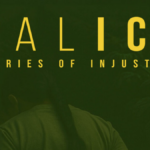
Los Angeles audiences will have an opportunity to witness art used as a powerful form of activism when Constance Marie and eight other actors take to the stage to read monologues inspired by true stories of families and communities affected by ICE.  Malice: Stories of Injustice, a special two-night theatrical event at the Odyssey Theatre Ensemble.

The monologues are inspired by real stories and written by Vivianne Nacif and Juan Pablo Oubina 
Directed by Vivianne Nacif.

Performances will be on March 10 at 8PM (Constance Marie will perform on this day) and March 11 also at 8PM. The performances feature nine monologues inspired by real-life stories of individuals affected by immigration enforcement actions. The fundraising event is designed inform and create community around the topic of immigration, not only as a theatrical experience but as a fundraiser with all proceeds going to help support and aid immigrant detained and/or their families.

Post-show discussions after each day’s performance will give the audience an opportunity to engage with the cast, writers, directors and discussions and learn what and where help will be provided for immigrants navigating the new challenges they face with ICE raids.

In addition to Marie, the actors (and the roles they will play) donating their time and talent to these two day charitable performances include:

Eduardo Enrikez – Francisco (Paletero) 
Angelines Santana
– Linda (Tamalera) 
Alejandro Cardenas
– Andry Hernandez (make-up artist) 
Iran Daniel
– Alma (Home Health aid worker) 
Eduardo Enrikez
– Marcos (Gardner) 
Constance Marie 
English performance only – Angeles (Agricultural worker) 
Vivianne Nacif 
  – Mariana (Jazmin’s mom) 
Alex Peña
– Antonio (Daca Recepient-uber driver) 
Maria Jimena Gastelum
-Sofia (US citizen College Student) 

All proceeds from the performances will benefit Mar Vista Voice and West Los Angeles Rapid Response Network, grassroots groups working on the front lines to provide legal aid, emergency response alerts, and community support for families impacted by ICE detentions.

The evening brings together actors who will portray the voices of individuals whose lives have been directly affected by immigration enforcement. Rather than statistics or headlines, the monologues present deeply personal narratives that reveal the human impact of policy.

“These monologues are based on are real people,” said Marie. “They’re not numbers or talking points. Many of them have lived in this country for decades and contributed enormously to the communities they live in.”

Marie will perform during the English-language performance on March 10, portraying an agricultural worker whose story reflects the experiences of many essential laborers. The Spanish-language performance will take place March 11, bringing the stories to Spanish-speaking audiences.

Among the characters represented are long-time residents, workers, and even a DACA recipient studying law whose life was disrupted by detention.

Art as Action

For Marie, whose decades-long career includes iconic roles in films like Mi Familia and Selena and starring as Angie Lopez on George Lopez (2002–2007) and Regina Vasquez on Switched at Birth (2011–2017) and most currently in TV showrunner Gloria Calderon Kellett’s With Love, working on Malice reflects her belief that storytelling can play a role in social awareness and community engagement.

“The antidote to despair is action,” Marie said. “People can protest, they can donate, they can post online — and this performance is another way to take action. Creative resistance is important right now.”

Audience members are encouraged to attend, bring friends, and engage with the community through the event and enjoy an evening is meant to be both moving and empowering.

For Marie, being part of this creative fundraiser is more than doing a monolough of another persons’ real life experineces with ICE — it is personal. “The hardest part for me is being in a country where I am a citizen but because the color of my skin i’m asked for my papers. I’m indigenous but because i’m brown I have to worry about the racial profiling that’s happening.”

Malice: Stories of Injustice performances will take place at the Odyssey Theatre in Los Angeles with two performances:

Tickets and donation information can be accessed through Constance Marie’s Instagram, @GoConstance, where a link and QR code are available for purchasing tickets or contributing to the cause, or at The Odyssey Theater website. Donations can also be made online at the Odyssey Theater Support Page, However, make sure to to indicate your donation is restricted funds to be used only for Malice charities.

Marie leaves us with an ecnouraging thought, “Right now many people feel overwhelmed. But community is the answer. Remembering our humanity and our shared stories are essential.”

By Bel Hernandez Castillo

In the crowded field of documentary shorts this awards season, the Oscar nominated The Devil Is Busy stands out not through spectacle, but through access and immediacy. Executive produced by award-winning journalists Soledad O’Brien and veteran producer Rose Arce, the film directed by Geeta Gandbhir and Christalyn Hampton offers a clear-eyed portrait of reproductive healthcare in America after the 2022 reversal of Roe v. Wade. directed by 

The result is one of the most quietly powerful entries in this year’s Oscar race—and a reminder that the debate over reproductive rights is no longer theoretical, but unfolding daily at clinic doors across the country.

When the U.S. Supreme Court overturned Roe v. Wade in 2022, it didn’t just change the law—it erased half a century of protections that women in the United States had fought to secure.

“It was really back at the end of 2022 that we started thinking.  If this happens, if in fact Roe v. Wade is no longer the lay of the land, what could we do”, explained O’Brien on the urgency to “do something” immediately after the law was overturned. 

“There is actually a very strong Latina connection to all of this”, Arce points out. “During the Supreme Court oral arguments Supreme Court Justice Sonia Sotomayor asked the question of the Court, “Will this institution survive the stench this creates?”  Aware of the challenge ahead, O’Brien and Arce understood the mission and went to work producing the documentary. They approached the Ford Foundation and it was a Latina, Sonia Enriquez and Darren Walker who both said, yes to the funding.  “Once we had the film, a Latina executive at HBO was the one that said ‘OK…I am gong to run this’.” The Devil Is Busy has been streaming on HBO Max since September 23, 2025.

Powerfully, the film arrives guided by Latina leadership behind the scenes, bringing journalistic rigor and emotional clarity to a subject that too often gets reduced to political slogans. 

Filmed in cinéma vérité style, the 30 minute documentary short unfolds over the course of a single day, inside a women’s healthcare clinic in Atlanta.  Tracii, the facility’s head of security, navigates the daily reality of protecting patients and staff amid ongoing protests and heightened threats – from security sweeps of the premises to escorting patients inside while safeguarding their anonymity. 

For more than five decades, American women lived with the protections established under Roe v. Wade. The Devil Is Busy starkly contrasts that era with the new reality many patients face navigating restrictive state laws and an increasingly hostile climate surrounding reproductive care. 

Rather than relying on political commentary, the filmmakers keep the camera trained on the human infrastructure holding the system together. Tracii emerges as the film’s emotional anchor—part protector, part counselor. The documentary avoids polemics in favor of observation, allowing viewers to witness the emotional and operational toll on the staff tasked with ensuring women can still access basic healthcare.

The film’s power lies in this juxtaposition: routine healthcare operating under extraordinary pressure.

At a brisk half hour, The Devil Is Busy is compact but potent filmmaking. In an awards season often dominated by sweeping global stories, this short opts for a focused lens on a single clinic, a single day, and a single gatekeeper standing between patients and the chaos outside.

The Latina Independent Film Extravaganza (LIFE) Film Festival has unveiled its 2026 honorees, announcing that Oscar-winning producer Yvette Merino and acclaimed film and television director Patricia Riggen will be recognized at this year’s event, set for March 5–8, 2026 in Boyle Heights and Pico Rivera.

Now in its 13th year, the annual celebration of Latina-directed cinema will present Merino with the Lupe Ontiveros Award on Opening Night, while Riggen will receive the Maverick Award. Both honors spotlight Latina leaders whose work has reshaped representation, storytelling, and opportunity across the entertainment industry.

Yvette Merino to Receive Lupe Ontiveros Award

Merino, producer at Walt Disney Animation Studios, will be honored for a career defined by artistic excellence and trailblazing achievement. The Lupe Ontiveros Award—named after the late actress who paved the way for generations of Latina performers—recognizes women whose careers demonstrate courage and a sustained commitment to expanding representation in film.

Merino made history as the first Latina to receive the Academy Award for Animated Feature for producing Disney’s Encanto. Over her 25-plus years at Disney Animation, she has served in key production roles on blockbuster titles including Tangled, Wreck-It Ralph, the Oscar-winning Big Hero 6, and Oscar-nominated Moana.

Following Encanto, Merino earned an Emmy Award for producing the short film Once Upon a Studio and served as producer on Moana 2. She is currently producing Zootopia 2. Beyond the screen, Merino was also instrumental in launching Voces@Disney, the studio’s first Latino employee resource group, serving as co-president for two years.

Patricia Riggen to Receive Maverick Award

Riggen will be presented with the Maverick Award, honoring a filmmaker whose body of work has challenged dominant narratives while bringing underrepresented stories to global audiences with authenticity and emotional depth.

Widely regarded as one of America’s leading female directors, Riggen’s feature credits span genres and scale. Her recent action thriller G20 stars Viola Davis, while earlier work includes Sundance breakout feature Under The Same Moon/La Misma Luna and Sony Pictures’ box-office hit Miracles from Heaven starring Jennifer Garner.

Her television directing credits include multiple episodes of the Emmy-winning limited series Dopesick starring Michael Keaton, as well as season one of Tom Clancy’s Jack Ryan.

A graduate of Columbia University School of the Arts, Riggen’s early short film work earned a Student Academy Award, Student Emmy, and Mexican Academy Award. She later directed Lemonade Mouth, which received a Directors Guild of America nomination, and the Chilean mining drama The 33 starring Antonio Banderas and Juliette Binoche—a production that required 30 days of filming underground in active mines.

Originally from Mexico, Riggen remains one of the few women of color to have directed top-grossing studio features in the past decade and continues to mentor emerging Latino filmmakers.

Festival Leadership and Mission

LIFE is led by Festival Directors Iris Almaraz and Cristina Nava, whose shared focus on community engagement, equity, and independent film continues to define the festival’s growth. Nava, a veteran independent producer and cultural organizer, brings decades of experience championing socially conscious storytelling and grassroots arts advocacy. Together, Almaraz and Nava position LIFE as both a platform for exhibition and a space for mentorship, networking, and long-term career development.

Founded thirteen years ago by screenwriter and playwright Josefina López (known for writing the groundbreaking film and Broadway play Real Women Have Curves), the festival was built on the belief that representation matters and that diverse voices strengthen the cinematic landscape.

In addition to screenings, the 2026 edition will feature panels, workshops, and networking sessions connecting emerging Latina directors with industry leaders and resources. LIFE is a fiscally sponsored project of the National Association of Latino Independent Producers (NALIP).

Tickets and full programming details are available at www.LIFEFilmFestLA.com.

By Judi Jordan for Latin Heat

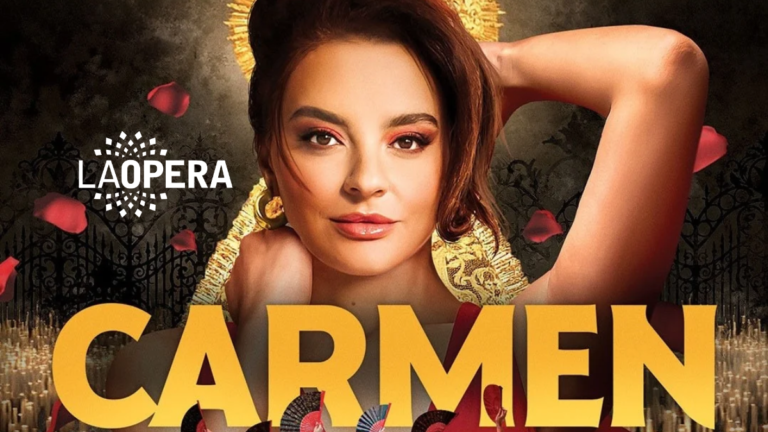
Vinícius Costa da Silva never planned to become opera’s favorite dark presence. Offstage, he’s warm, joyful, quick to  laugh. Onstage, the 6’3″, curly-bearded Brazilian commands priests, rogues, and powerful men  with effortless authority. That contrast — sunlight personality, shadow roles — is part of the  intrigue. And so, Brazil’s 2026 winning streak continues with a São Paulo native commanding the stage at LA Opera’s epic production of Akhnaten direccted by Philip Glass.

Costa’s journey from São Paulo’s working-class East Zone to LA Opera feels like destiny with a  strong assist from grit. The path wasn’t linear. It rarely is. 

Like many musicians, it began with curiosity. Costa was first drawn to the “funny-looking”  French horn, fascinated by its shape. The real turning point happened somewhere far less  glamorous — a school restroom. A classmate overheard him singing and told the choir master,  “He can sing!” Costa was suddenly doing solos. 

“Back then, I was just a curious kid trying different things. But after I sang for the choir master,  that’s when I found my true voice.” Support followed — slowly, then fully. 

“I had a very good family: my mom Marina Costa, brother Pedro were big supporters and my  father Zorandir Ramos — after a while when he realized that I could make some beautiful sound,  he got courage enough to come and listen to me then he started supporting me also.” 

From choir boy to opera stages, Costa’s trajectory reads like a sequence of doors opening — each earned. Mentors guided him from Brazil to Basel, where he completed bachelor, master’s  and post-master’s degrees, before arriving at LA Opera’s Domingo-Colburn-Stein Young Artist  Program. Akhnaten marks his fifth LA Opera role — with more ahead. 

Two early figures remain foundational: Maria Lúcia Waldow and retired baritone-turned-teacher Francisco Campos

“I treat them like Sensei,” Costa says, recalling lessons after school and how Campos would feed  him when he arrived hungry. Waldow’s message was constant: discipline, standards, no  shortcuts. “She was always telling me you don’t sacrifice quality!”  And: “You have to practice — a lot!” 

Costa smiles. “They not only taught me to sing but taught me what it means to be a  professional.” 

That seriousness toward craft defines him. Costa doesn’t approach roles technically — he  approaches them anthropologically. Languages, history, psychology — all part of the  preparation. German, French, Italian, Spanish, English — and the cultural codes behind them.

“Opera isn’t just about hitting the right notes — it’s about understanding the meaning behind the  words,” Costa said. “When I sing in a new language, I dive deep into its culture. I watch films,  listen to native speakers, to immerse myself as much as possible. I want to give the character the  depth it deserves.”  It shows. 

Whether as Aye in Akhnaten — father of Nefertiti and advisor to the Pharaoh — the Duke in Roméo et Juliette, or the Speaker in The Magic Flute, Costa specializes in dimensional authority.  Villains with interior life. Power with psychology. 

“The bass is often the villain, but I don’t play him as just evil. I try to find what makes him tick,  what makes him real.” 

Offstage, the intensity softens. Costa remains disarmingly grounded — curious, hardworking,  visibly grateful. The Young Artist Program at LA Opera plays a major role in that evolution. 

Vinícius Costa as Aye, Yuntong Han as the High Priest of Amon, Hyungjin Son as Horemhab (Photo Credit: LA Opera)

“LA Opera has been an amazing place to grow,” he says. “Everyone here does their job at such a  high level, and we’re treated with so much respect. It’s a place where artists are encouraged to be  their best, but they also feel supported. It’s been the perfect environment to learn and improve.” 

And yet, the perspective remains intact. 

“I never expected to be here,” Costa says. “I grew up in a place where classical music was rare.  But thanks to opportunities like the Guri Santa Marcelina program, which brought music into  communities that lacked access, I was able to find my path. Music was never ‘supposed’ to be a  part of my life, but now it’s everything.” 

Representation matters — and Costa understands the symbolism. 

“I’m incredibly proud to represent my country. Brazilian culture is rich, vibrant, and full of heart,  and I feel like the world is finally recognizing it.” 

The next chapter is already unfolding. This season includes Falstaff, one of his favorites. “It’s just so joyful, so playful, and it has some of the most beautiful music. I’ve always wanted to  be a part of it, and now I get to live that dream.” 

Looking ahead, Costa is drawn to roles with philosophical weight — darker edges, psychological  complexity, the devilish spectrum opera does so well.  Which brings us back to the title: Sweet Villainy. 

For Vinícius Costa da Silva, the tension between warmth and shadow isn’t a contradiction. It’s  the instrument. And LA Opera audiences are just beginning to hear its full range.

Akhnaten returns after 10 years to the Dorothy Chandler Pavilion, with performances running from February 28 to March 22, 2026. This revival features countertenor John Holiday in the title role and is conducted by Dalia Stasevska in her company debut

Same Opening Weekend, Different Results 

By Andrea Nunez-Gamboa

In a rare occurrence, two Latino-themed films—Clika and The Dreamer Cinderella—competed at the box office this past January 23. The films simultaneous release offers a revealing look at how marketing strategies that address similar markets operate at opposite ends of the industry spectrum, namely studio-backed campaigns with substantial resources versus the limited marketing budget of independent films.

It is well documented that U.S. Latinos are the most avid moviegoers in the U.S. This matters not only because the film industry is experiencing sustained declines in movie attendance—limiting the discovery of new films and talent—but also because Latino audiences represent untapped economic potential.

A 2023 McKinsey’s research study found that the US film industry might generate an additional $12 to $18 billion annually if Latino cultural representation in films increased,. 

Latinos account for roughly 30% of the U.S. economy with a collective GDP that would rank as the fifth largest in the world, according to The Latino Donor Collaborative, a think tank that produces yearly studies on the filmgoing habits of U.S.Latinos  The disconnect between economic power and the industry’s representation of Latinos raises a persistent question: Why does Latino visibility in U.S. films remain so limited?

It is a complicated answer that includes the lack of studio greenlighting for Latino projects, smaller budgets, and limited marketing support. As a result, many Latino filmmakers turn to the independent route, where little to no funding is allocated to marketing. By the numbers, the disparity is striking: The ratio between a studio film’s marketing budget and an independent film’s is approximately 87 to 1.   

Sol Trujillo, co-founder of the Latino Donor Collaborative (LDC) and former Fortune 200 CEO, argues that Hollywood studios are leaving billions of dollars on the table by failing to produce and properly market content for U.S. Latinos. Based on the 2024 LDC U.S. Latinos in Media Report, Latinos  purchase 24% to 29% of all box office tickets, yet remain one of the most underrepresented groups on screen.

Same Opening Week, Different Budgets

The simultaneous release of the two Latino themed independent films Clika and The Dreamer Cinderella, represented a strong moment for Latino representation in cinema this past January. Led by Mexican American directors, producers, and actors, both projects reflected contemporary cultural themes. However, their markedly different production and marketing resources set the stage for contrasting box office trajectories.

Clika, a music drama directed by Michael Greene and produced by Jimmy Humilde, follows Chito (Jay Dee), a small-town musician whose viral success propels him into the world of corridos tumbados, a subgenre of regional Mexican rap music. Distributed in 522 theaters, the film benefited from the backing of Columbia Pictures, a Sony subsidiary with a robust marketing infrastructure. Given Sony’s existing ties to Humilde’s Latin record label Rancho Humilde, the project aligned seamlessly with the company’s brand ecosystem.

The Dreamer Cinderella tells the story of Xochitl, a fruit vendor whose life changes when a filmmaker casts her as the subject of a daring bet, revealing her as a hidden star. Directed and produced independently Dr. Ruiz Productions with first time director Dr. Jose Luis Ruiz, this independent film was distriubted in only 16 theaters by Atlas Distribution. The difference in marketing visibility between these two films is stark, but as the performance data will show, scale is not the only strategy at producers’ disposal to drive attendance.

Measuring Momentum, Not Scale

Trying to evaluate each film’s marketing effectiveness by comparing their total box office gross ticket sales would be unfair. Between January 23 and January 27, Clika earned $1,520,455 while The Dreamer Cinderella earned $8,880—a differential that reflects their vastly different scales of distribution. Instead, it is more equitable to compare the percentage changes in daily gross ticket sales respective to each film. This approach highlights momentum rather than reach, an especially useful lens for independent films whose full box office data is often underreported. While these limitations make a fully precise picture difficult, the figures still offer a meaningful basis for interpretation.

Takeaway: Clika

Clika’s performance data shows relatively moderate fluctuations, meaning the film experienced smaller declines following opening day and steadier rebounds throughout the opening week. This suggests consistent brand recognition and predictable audience reach. Even when attendance dips, the film’s structural visibility helps cushion the decline later in the week, allowing it to recover audience attendance by the following weekend.

This performance can be attributed to an ongoing baseline marketing presence supported by a studio-led campaign and a distributor such as Columbia Pictures/Sony. The strategy included a strong digital footprint, paid social media exposure, radio and podcast interviews, and billboard placements, which are elements that align with the comprehensive distribution and promotional approach typically associated with major studio releases.

Takeaway: The Dreamer Cinderella

The Dreamer Cinderella’s performance during opening week, by contrast, is characterized by sharp declines followed by a dramatic rebound, with its highest upward growth occurring on January 27 the last day of the theatrical run. This trajectory suggests a performance closely tied to marketing pushes, particularly those driven by community-based promotion, with targeted theaters, universities, film festivals, paid social media and community partners.

“…when the audience is targeted correctly, they respond.”

As an independent film, the key insight here is clear: When marketing aligns with audience outreach, the response is powerful. The spike in performance shows that when the audience is targeted correctly, they respond. Independent films can perform well, as audience interest often exists, but tailored marketing is required to make a meaningful difference during opening week.

In the case of The Dreamer Cinderella, there was an intentional effort to invest independent dollars into marketing, almost as a case study to test the idea that even modest marketing spending can influence performance and drive attendance.

Dr. Ruiz Productions joined forces with Entertainment Media Specialist to launch a groundbreaking case study of with The Dreamer Cinderella, and Latino independent film marketing. Modeled after major studio marketing strategies—but without the luxury of nine-figure budgets.  The Independent Latino Film Marketing Campaign (ILFMC) study harnessed the power of grassroots community outreach, mobilizing Latino organizations nationwide and reaching out to independent thaters to screen the film through a film distributor and community engagement. Together all helped build a smart, targeted, community-driven release strategy. 

FINAL THOUGHTS

“Ultimately, this analysis suggests that budget size matters less than how resources are allocated. As Latino audiences continue to grow and drive box office revenue, films made for these communities must be paired with marketing strategies that recognize their value and meet them where they are.”

The opening-week data makes one point clear, namely that marketing determines whether Latino audiences show up, not whether they exist. Clika’s steadier performance reflects sustained visibility, whereas The Dreamer Cinderella’s volatility reveals untapped demand that can be activated when outreach is strategic.

For Latino films, especially independent films, success is not a question of scale but marketing precision. When marketing investment is culturally informed and strategically deployed, independent projects can compete with large-scale commercial releases. In a market as powerful as the Latino audience, marketing is not optional. It is the difference between invisibility and impact, something that Latino movies should consider to gain a foothold in the film industry.

Ultimately, this analysis suggests that budget size matters less than how resources are allocated. As Latino audiences continue to grow and drive box office revenue, films made for these communities must be paired with marketing strategies that recognize their value and meet them where they are.

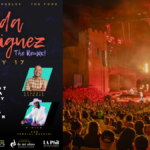
Festival La Onda 2026 promises an unforgettable celebration of Latin music, culture, and community — set against the iconic backdrop of Napa Valley.

Buena Onda Presents has unveiled the star-studded lineup for the 2026 edition of Festival La Onda, returning May 30–31 to the Napa Valley Expo in the heart of downtown Napa. Headlining this year’s two-day Latin music celebration are Maná, Ivan Cornejo, J Balvin, and Christian Nodal, leading one of the most dynamic Latin festival lineups in the country.

Timed for the weekend following BottleRock Napa Valley, La Onda delivers a premium festival experience spotlighting the hottest Latin artists across genres including Mexican Regional, Reggaeton, Rock, Hip Hop, Latin Pop, Salsa, and more. The 2026 lineup also features Danny Ocean, Los Tucanes de Tijuana, Los Fabulosos Cadillacs, Paulo Londra, La Arrolladora, El Gran Combo de Puerto Rico, Grupo Niche, Molotov, Orishas, Chiquis, Kinky, Ozomatli, and dozens of rising and established acts.

Beyond the music, Festival La Onda offers a fully immersive experience complete with curated Latin cuisine, specialty beverages, shaded lounges, spa activations, a dance club, silent disco, and elevated viewing areas — all infused with Napa Valley’s signature hospitality.

Premium ticket options elevate the weekend even further. VIP guests enjoy access to the VIP Village with premium bars, shaded seating, air-conditioned restrooms, and prime sightlines. El Mirador offers elevated decks with all-inclusive drinks and shaded lounges, while Suite and Platinum Experiences deliver unmatched luxury, including private viewing areas, concierge services, premium dining, and front-row access.

Weekend and single-day tickets are on sale at LaOndaFest.com. General Admission weekend passes start at $218, VIP at $448, El Mirador at $1,287, and Platinum at $3,318, with flexible layaway plans available.

For updates, visit LaOndaFest.com, sign up for text alerts, and follow @LaOndaFest across social platforms.

LatiNation Media is celebrating Black History Month with a new special episode of Blacktinidad, a program which has been spotlighting Afro-Latino culture and heritage in Puerto Rico since 2021 will air Friday, February 13 at 7:00 p.m. ET / 4:00 p.m. PT across LatiNation’s platforms, including its flagship cable network LATV, LatiNation FAST, and the LatiNation+ app.

Blacktinidad is a signature LatiNation series that celebrates the diversity and richness of the Afro-Latino experience, offering a platform where stories of identity, resilience, and joy take center stage. Through bold storytelling and authentic representation, the series has cultivated a loyal and growing audience across television, streaming, and social platforms.

Hosted by Eliana, the episode follows her return to Puerto Rico for an immersive journey into the island’s Afro-descendant traditions, centering on Loíza, widely regarded as the heart of Afro-Puerto Rican culture. Her visit begins at Taller de N’Zambi, where she explores the rhythms and movement of Bomba de Loíza, one of Puerto Rico’s most powerful and historically rooted musical traditions.

The special also features an intimate visit with legendary culture bearer Raúl Ayala, whose family has preserved the artistry, history, and traditions of Bomba for more than seven decades. Eliana further dives into the cultural significance of Puerto Rico’s iconic Vejigante masks, before closing the episode at El Kiosko La Comay, a beloved Loíza institution known for its traditional cuisine and deep community roots.

The special underscores LatiNation Media’s commitment to culturally driven programming that reflects the lived experiences of U.S. bilingual and bicultural Latinos. The award-winning media company operates LATV, the independent cable network reaching 81% of U.S. Hispanic households in the top 47 DMAs, along with LatiNation FAST, the LatiNation+ app, and a robust in-house production studio. Its content spans linear TV, FAST/AVOD/CTV, digital, and social platforms.With its Black History Month Blacktinidad special, LatiNation continues to amplify Afro-Latino voices and stories, reinforcing its mission to serve as a cultural connector across the Black and Latino diaspora.

Reviewed by Bel Hernandez Castillo

The Circle, a tragicomic theater production by playwright Stacey Martino Rivera, delivers a deeply emotional, thought-provoking, and often disarmingly funny exploration of family grief, identity, and reconciliation. Directed with sensitivity and imaginative scope by D.W. Jacobs, and featuring original music by Germaine Franco, the production resonates long after the final bow.

Set over one chaotic weekend in Texas, The Circle brings together three generations of the Medinas and Mahoneys families. What unfolds is not merely a family drama but a mirror reflecting America’s fractured emotional and political landscape. Through moments of absurdity, tenderness, and piercing confrontation, the play suggests that truth itself is subjective — that every character holds their own version of reality, each equally valid. In this way, The Circle invites empathy rather than judgment, urging audiences to expand their capacity for understanding rather than retreat into certainty.

This is an introspective work that challenges easy answers. The emotional core of The Circle rests in its insistence that exclusion of any lived truth is itself invalid. Rivera’s writing insists that reconciliation, not punishment, must guide our approach to harm, conflict, and healing — a message that feels particularly urgent in today’s social climate.

(L-R) René Rivera as José Medina and Michael Brainard as Bud Ireton in The Circle

The cast delivers uniformly powerful performances, but two stand out for their depth, control, and emotional honesty: Michael Brainard as Bud Ireton and René Rivera as José Medina. Their performances anchor the production, providing a masterclass in restraint and emotional precision. What makes their work especially compelling is the raw authenticity they bring — never overplayed, never forced — allowing moments of vulnerability to emerge naturally and profoundly.

René Rivera, a Lifetime Member of The Actors Studio, brings extraordinary gravitas to José Medina. His distinguished career spans Broadway, Off-Broadway, television, and film, including collaborations with Al Pacino, Kevin Kline, Anne Bogart, and Stephen Berkoff. Here, Rivera channels decades of craft into a performance that is both intimate and commanding. 

Michael Brainard’s Bud Ireton is equally compelling — layered, conflicted, and achingly human that demands his voice be heard.  Brainard, known for his work in All My Children, Santa Barbara, and numerous film and television projects, creates a character whose emotional evolution feels deeply lived-in and profoundly sincere.

Cast of The Circle

The ensemble is solid across the board. Alma Martinez delivers a deeply moving performance as the dying matriarch Eva Medina, embodying both fragility and fierce emotional presence. Victoria Ratermanis as Molly Medina, Lisa Richards as Maeve Mahoney, and Jeanette Godoy as Mary Padrón each bring nuance and emotional complexity to their roles. Ava Rivera and Luna Rivera, portray Anna Medina at ages sixteen and twelve respectively, offering remarkable emotional maturity and authenticity. Lakin Valdez rounds out the cast with a strong and revealing performance as Ronnie Medina.

Martino Rivera explains that she wrote The Circle as an act of healing — for herself, her family, and ultimately, for a society fractured by polarization. The play’s exploration of racial justice, environmental justice, immigration, restorative justice, and belonging unfolds organically, never feeling didactic. 

Director D.W. Jacobs, drawing on decades of work with epic literary traditions — from Dickens to Dante — Jacobs infuses the play with a spiritual and emotional architecture rooted in memory, cyclical time, and transformation. 

The Circle is a rare theatrical experience — emotionally raw yet humorously alive. It does not offer easy conclusions. it opens a space for reflection, empathy, and perhaps, transformation.

Verdict:The Circle is powerful, courageous theater — urgent in its themes, exceptional in its performances, and essential viewing for audiences seeking art that challenges, heals, and inspires.

The production is dedicated to the late C. Raul Espinoza, posthumous producer of the play, whose legacy of community engagement and cultural advocacy is deeply felt throughout the evening.

The Circle will continue to play at the Greenway Court Theatre, 544 North Fairfax Avenue (at Melrose Avenue), Hollywood, CA  90036 on Fridays and Saturdays at 8:00 p.m., and Sundays at 2:00 p.m. The show will be playing for the remainder of the run on  Fridays, February 13 and 20 at 8:00 p.m., Saturdays, February 20 and 28 (a added Bonus performance) at 8:00 p.m., and Sundays at 2:00 p.m., February 15 and 21. Saturday, February 14th, Valentine’s Day, will be dark.

For further information and to buy tickets online, please visit https://greenwaycourttheatre.org  Tickets can also be purchased by E-mailing boxoffice@greenwayartsalliance.org or calling the Greenway Court Theatre at 323-655-7679, ext. 4.

Verified by MonsterInsights